FORBES: The challenge of consumption in the midst of economic opening: credit and lower rates, the keys that the durable goods market expects
Laura Mafud. Publisher
At the beginning of one of the main sectoral business meetings in La Rural, industrialists and commercial channels analyze the impact of the greater supply of imported products and the need for financing to reactivate sales of household appliances and technology.
June 30, 2026 15.06

Carlos Clur (Photo: Courtesy Electronics & Home 2026)
That reading coincides with the data you presented NielsenIQ (NIQ) in the same framework Electronics & Home 2026: In the accumulated period as of May 2026, the Argentine appliance market registers a 3% decrease in units sold compared to the previous year. The monthly reading, however, shows a slowdown in this fall: in May the drop was 2%, a product of the HotSale and the consumer climate prior to the World.
“The market is waiting for the interest rate to drop and credit to appear,” said the executive. According to his vision, the financing Mass is the indispensable tool to drive the sale of items with a higher unit value, such as washing machines or refrigerators, through traditional mechanisms such as interest-free installments. “The economy will make the ‘click’ when rates drop to reasonable prices so that the consumer regains long-term confidence and can renovate their home or move their business,” he explained to the media.
The behavior by segments, in fact, is disparate. According to NielsenIQ, Telecommunications and Air conditioning show the most relevant falls, with declines of 25% in units, while MDA/White Line and SDA/Small Electro maintain positive performance, with a growth of 7%. CE/Brown Line, For its part, it grows only 3% in units but stands out in billing, reflecting a higher average ticket due to consumer preference—prior to the World Cup—towards TVs larger than 55 inches. ITEM registers a positive but more moderate variation, of 1% in units.
The report also points out a strong concentration by categories: In units, the top 10 explain 51.6% of market sales. The smartphones They lead that ranking with 13% participation, although they fall 27% in units; They are followed by televisions (PTV), with 7% participation and a growth of 27%, and the headsets, also with 7% participation but with a drop of 16%. In billing, the concentration is even greater – the 10 main categories represent 75.8% of the total market value – and smartphones once again lead, with 20% share, followed by televisions with 15%. Completing the podium of relevant categories are refrigerators, washing machines, air conditioners, notebooks, kitchens, fans, consoles and water heaters.
 (Pixabay)
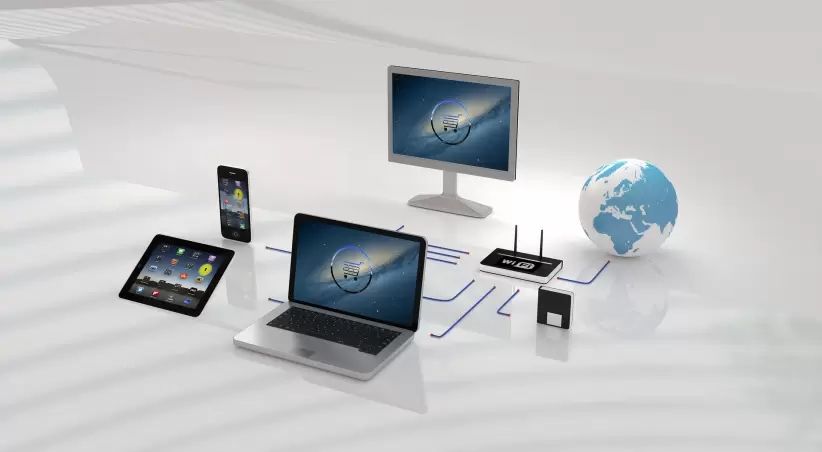
Another piece of information that the consulting firm provided is the evolution of the online channel: its share in units went from 55% in 2025 to 58% in 2026, consolidating itself as a central channel for purchasing household appliances and technology. In May, coinciding with the HotSale, that monthly participation reached 61%.
Diversification against the ceiling of traditional products
Despite the challenges posed by a consumption who still doesn't wake up, The corporate sector seeks to anticipate the change in cycle by diversifying its portfolios. Given the stagnation of certain traditional categories, the companies' strategy decisively aims to incorporate new verticals, such as furniture and mattresses, to meet the billing goals of the commercial channels.
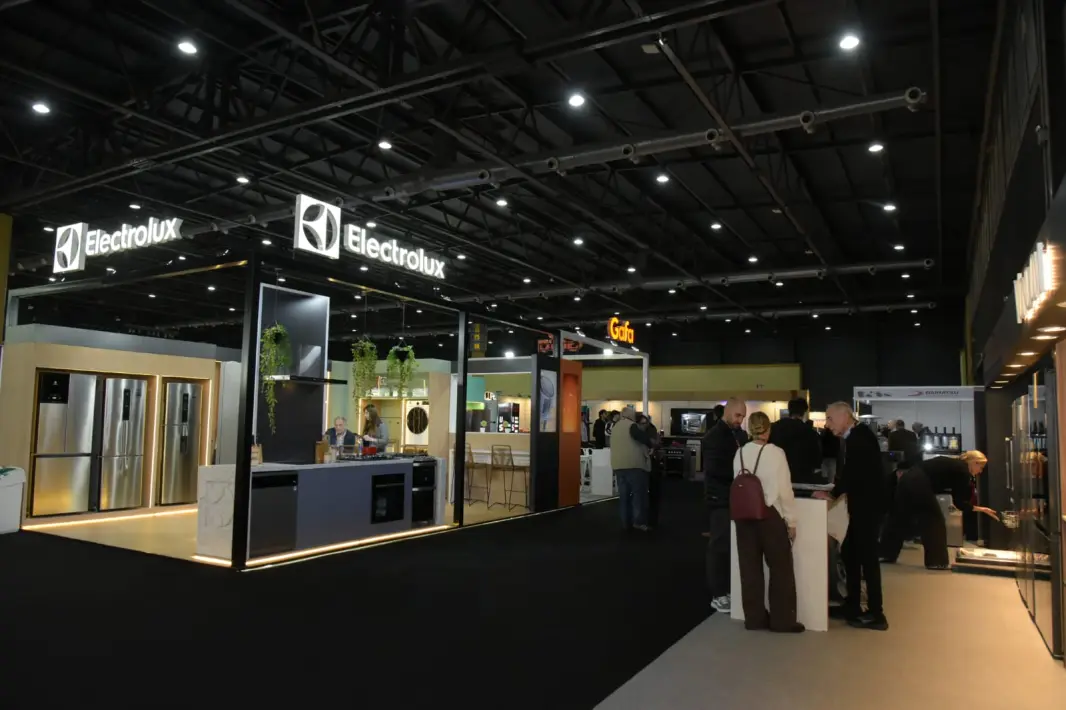
In this sense, the current panorama combines the preparation of special promotions aimed at retail with a focus on the regional medium term. “We believe that Latin America is a great opportunity. If an Argentine factory is competitive now that the economy has opened, it has a real opportunity to export to Brazil and other countries, since Argentina has become a very competitive market“, analyzed Clur, organizer of the event.
 (Photo: Courtesy Electronics & Home 2026)
However, to consolidate this export profile, he warned about the need to apply support measures so that the national industry is efficient, taking as reference the development models of countries such as South Korea, Japan o China, where a solid industrial policy allowed the birth of global companies.
The future of business: Artificial Intelligence and mobility
On a technological level, the business of mass consumption continues to be led by cell phone, listed as the best-selling product of the last decade. However, the true evolution of the industry in the coming years will not come from new communication devices, but from the transversality of the Artificial intelligence (IA).
AI will no longer be exclusive to phones to be fully integrated into appliances, cars and clothing, moving from the old concept of smart homes to “generative houses“, capable of learning from user habits in just 60 days.
Finally, the sector's recomposition agenda will be completed in the medium term with the development of the electric mobility e hybrid (bicycles and motorcycles), a segment that, although today has a more communicational than volume focus in the local market, is beginning to gain ground in corporate and logistics use under the global premise of sustainability and zero carbon emissions.
Share content!
+Info